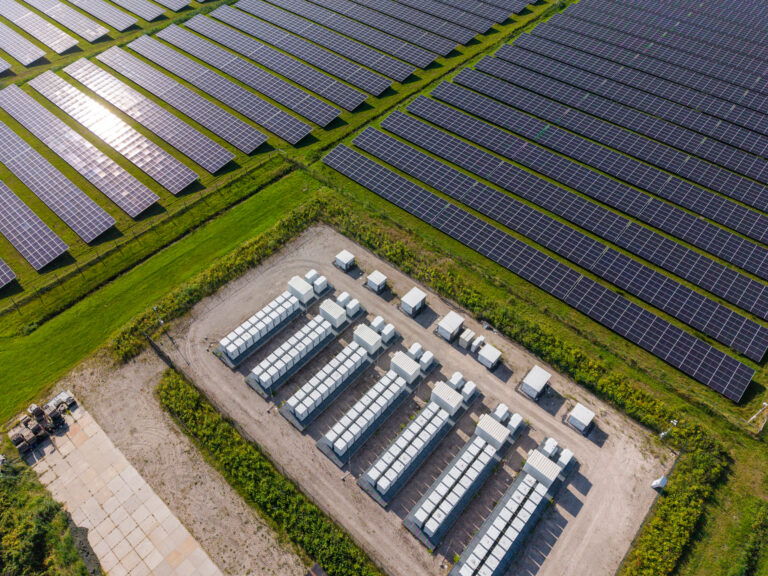
As the UK continues its transition towards renewable energy, battery storage is attracting increasing attention from investors, energy providers and businesses. With electricity generation becoming more dependent on renewable sources such as wind and solar, the ability to store and manage energy efficiently is becoming increasingly important.
Recent investment announcements highlight the growing role of battery storage in supporting the UK’s electricity infrastructure, improving grid flexibility and making better use of renewable generation.
But what’s driving this investment, and what could the continued development of battery storage mean for UK businesses?
Why Is Investment in Battery Storage Increasing?
As renewable energy generation expands, managing the balance between electricity supply and demand is becoming increasingly important.
Unlike traditional power generation, renewable sources such as wind and solar depend on weather conditions, meaning electricity isn’t always generated when demand is highest.
Battery energy storage systems (BESS) help address this challenge by storing electricity when generation is plentiful and releasing it when needed.
This flexibility can reduce the need to curtail renewable generation, support grid stability and help electricity networks respond to changing demand. As the UK works towards a cleaner electricity system, battery storage is therefore becoming an increasingly important part of the country’s energy infrastructure, creating opportunities for further investment and development.
Major New Investment in UK Battery Storage Projects
The growing importance of battery storage was highlighted in November 2026, when the National Wealth Fund announced investment in two major battery storage projects in Eccles and Kilmarnock, Scotland. Together, the facilities will provide 1GW of power capacity and 2GWh of energy storage, helping improve grid flexibility and support the integration of renewable electricity.
The projects are located along key electricity transmission routes between Scotland and England, where additional storage capacity can help manage electricity flows between areas of renewable generation and demand.
The developments are also expected to create or support more than 200 jobs during construction and operation.
Although these are large-scale infrastructure projects, rather than commercial battery installations, they demonstrate the increasing importance being placed on energy storage within the UK’s wider energy strategy.
The investment also reflects growing confidence in battery technology as an important part of the transition towards a more flexible and renewable electricity system.
How Could Battery Storage Benefit UK Businesses?
While much of the recent investment has focused on large-scale infrastructure, battery storage can also offer advantages for individual businesses.
Commercial battery systems allow electricity to be stored for use at a later time, helping organisations manage their consumption and potentially reduce energy expenditure. Depending on a business’s electricity usage and tariff arrangements, potential benefits include:
Peak Demand Management:
Stored electricity can reduce reliance on grid electricity during periods of high demand, potentially lowering certain peak-related charges.
Lower-Cost Electricity:
Businesses with suitable time-of-use tariffs may be able to charge batteries when electricity is cheaper and use the stored energy when prices increase.
Improved Energy Management:
Greater control over electricity consumption can help businesses manage their energy requirements more effectively.
These benefits will vary depending on individual circumstances, including electricity tariffs, consumption patterns, battery capacity and installation costs.
Supporting the Growth of Renewable Energy
Battery storage also has an important role in helping businesses make better use of renewable electricity. For businesses already investing in solar panels, battery systems can help address the difference between when electricity is generated and when it is needed.
Which Businesses Could Benefit from These Developments?
The growing investment in battery storage reflects its increasing importance across the energy sector, but the benefits of commercial installations will depend on individual business requirements.
Businesses with high electricity consumption, fluctuating demand or existing renewable generation may be particularly well suited to battery storage.
Manufacturing facilities and warehouses, for example, may benefit from managing periods of peak electricity demand, while businesses operating outside daylight hours could use stored solar electricity later in the day.
Organisations with suitable time-of-use tariffs may also benefit from shifting electricity purchases towards cheaper periods. However, businesses with lower electricity consumption or limited differences between peak and off-peak prices may find it more difficult to justify the upfront investment.
What Does the Future Hold for Battery Storage?
With major investment projects progressing across the UK, battery storage is becoming an increasingly important part of the country’s energy transition. Continued development could help improve the flexibility of electricity networks, support greater renewable energy generation and create further opportunities for businesses to manage their energy consumption.
However, while investment in large-scale projects demonstrates the growing importance of the technology, it doesn’t automatically mean commercial battery storage is suitable for every business.
Installation costs, electricity consumption, tariff arrangements and potential returns should all be considered before making an investment. For a more detailed look at the financial considerations, read our guide exploring whether battery storage is a worthwhile investment for businesses.
At Renewable Energy Solutions, we help businesses explore renewable technologies and energy management solutions designed to reduce costs, improve efficiency and support sustainability objectives.
Get in touch with our team to review your energy requirements and explore whether battery storage or other renewable solutions could benefit your business.