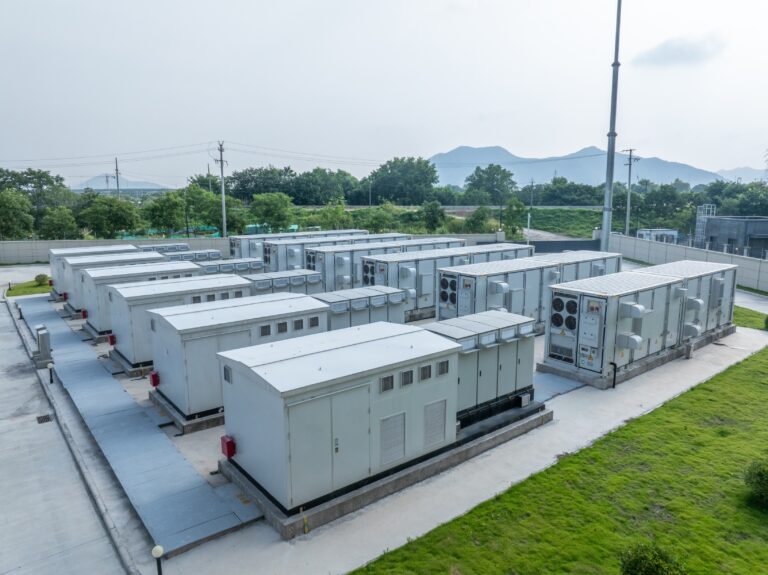
As energy costs fluctuate and sustainability becomes a higher priority, many businesses are looking for smarter ways to manage their energy use. Battery storage has quickly become one of the most talked-about innovations in the commercial energy landscape — but is it truly worth the investment? Below, we explore how battery storage works, the benefits it can bring to businesses, and whether it’s a worthwhile addition to your energy strategy.
What Is Battery Storage?
Battery energy storage systems, also referred to as BESS, allow businesses to store electricity for use at a later time. Instead of relying solely on grid energy as it’s needed, a battery captures and retains electricity — often during cheaper or lower-demand periods — and discharges it when it makes the most sense operationally or financially.
At the centre of a typical battery storage system are high-capacity lithium-ion batteries. These batteries are connected to an inverter, which converts stored DC electricity into usable AC power. A smart energy management system monitors real-time energy use, controls charging and discharging, and integrates with on-site generation such as solar PV, creating a seamless, automated solution.
In practice, a battery storage system continuously learns the energy patterns of the building, optimising when to charge, when to deploy power, and how to achieve the greatest savings. This combination of flexibility, automation, and efficiency is what makes battery storage such an appealing technology for modern businesses.

How Can Battery Storage Help Businesses?
Battery storage offers several compelling benefits that can support operational efficiency, greater cost control, and sustainability goals.
1. Reduced Energy Bills
One of the main advantages is the ability to shift energy usage from expensive peak periods to cheaper off-peak times. By drawing stored energy during high-tariff windows, businesses can significantly reduce their electricity bills. For those on half-hourly metering, even small shifts in consumption can produce measurable savings.
2. Greater Use of On-Site Generation
Many businesses already have solar PV installed but aren’t able to use all the electricity it generates. Instead of exporting surplus energy back to the grid for minimal return, a battery allows you to store that excess and use it on-site when needed. This increases the value of the solar investment and reduces reliance on the grid.
3. Improved Energy Resilience
Power outages, even short ones, can cause major disruption. Battery storage provides a backup power source that can keep essential systems running during unexpected interruptions. For businesses with critical operations — such as manufacturing equipment, refrigeration, or IT infrastructure — this additional layer of resilience can be invaluable.
4. Carbon Reduction and Sustainability
Using stored renewable energy on demand helps businesses lower their carbon footprint. Batteries support the wider shift towards low-carbon technologies by enabling better energy optimisation and reducing the need for carbon-intensive grid power at peak times.
5. Avoiding Peak Charges and Capacity Penalties
Some businesses face additional charges for drawing high levels of power during periods of peak demand. A battery can help smooth consumption and prevent these penalty costs, making your overall energy profile more efficient.
Growth and Market Trends in Battery Storage
Battery storage has seen significant growth in the UK over recent years, showing how rapidly the technology is being adopted. The UK’s battery storage pipeline reached 95 GW in 2023, an increase of around 67% year-on-year, reflecting strong momentum in both commercial and grid-scale projects. Industry data also shows that the number of completed battery energy storage projects rose by 78% year-on-year, with planning approvals increasing by almost 50%.
Meanwhile, a report by Grand View Research states the UK battery energy storage systems market generated USD 176.9 million in 2023, and is expected to reach USD 1,334.4 million by 2030. This rapid expansion demonstrates that battery storage is becoming a mainstream asset — and an increasingly valuable opportunity for businesses.
Is Battery Storage Worth It for Businesses?
The value of battery storage largely depends on the energy profile of the business, its operational needs, and its long-term goals. For many businesses, the financial and strategic benefits make battery storage a worthwhile investment, particularly when paired with other energy-efficient technologies.
Businesses with high daytime energy use, on-site solar PV, or exposure to peak tariffs often see the quickest returns. The ability to avoid expensive peak electricity rates, use self-generated power more effectively, and protect operations from outages can deliver measurable savings and efficiency improvements.
However, battery storage is not a one-size-fits-all solution. Factors such as installation costs, available space, existing infrastructure, and usage patterns all play a role in determining suitability. That’s why a detailed energy assessment is essential to understand potential savings and system performance.
Battery storage is rapidly becoming a powerful tool for businesses looking to stabilise costs, strengthen sustainability commitments, and enhance operational resilience. While the initial investment can be significant, the long-term financial and practical benefits often outweigh the upfront costs — especially for businesses with high or variable energy needs.
With the right expert guidance and tailored design, battery storage can be a highly valuable component of a modern, efficient energy strategy. Get in touch with our expert team today to discuss whether battery storage could be a suitable solution for your business.